Ishikawa Prefecture Travel Guide | Recommended Spots to Enjoy History, Culture, and Cuisine, and How to Get There
Ishikawa Prefecture Travel Guide | Recommended Spots to Enjoy History, Culture, and Cuisine, and How to Get There
2026-09-29
This guide provides an easy-to-understand introduction to the charms of Ishikawa Prefecture. It covers everything from classic tourist spots—such as Kenroku-en Garden, Kanazawa Castle Park, Higashi Chaya District, and Omi-cho Market—to transportation options from Tokyo, Osaka, and Kyoto, local cuisine, and suggested itineraries for one-day and one-night trips. It’s a practical guide perfect for first-time visitors to Kanazawa and Ishikawa.
2026-09-29
What is Ishikawa Prefecture like?
With the growth rate of foreign visitors expected to rank first nationwide in 2024, this area is highly recommended for foreign travelers, placing it on par with Tokyo and Kyoto. There are various reasons for its popularity among foreign visitors (more on this later). Broadly speaking, it offers the chance to enjoy quintessentially Japanese scenery and culture; its famous sights are concentrated in one area, making it easily accessible for day trips from Tokyo or Osaka—just about a two-hour journey; and it features hot spring towns, making it ideal for overnight stays. In this article, we’ll explore the charms of Ishikawa Prefecture.
Ishikawa Prefecture is located in Japan’s Hokuriku region, on the Sea of Japan coast. Kanazawa City, the prefectural capital, is known as a historic city that retains the atmosphere of an Edo-period castle town.
Ishikawa Prefecture is home to many tourist attractions where history and modern culture coexist, including Kenrokuen Garden—one of Japan’s Three Great Gardens—Kanazawa Castle, associated with the Maeda clan of the Kaga Domain, traditional teahouse districts, and the 21st Century Museum of Contemporary Art, Kanazawa, where visitors can enjoy contemporary art.
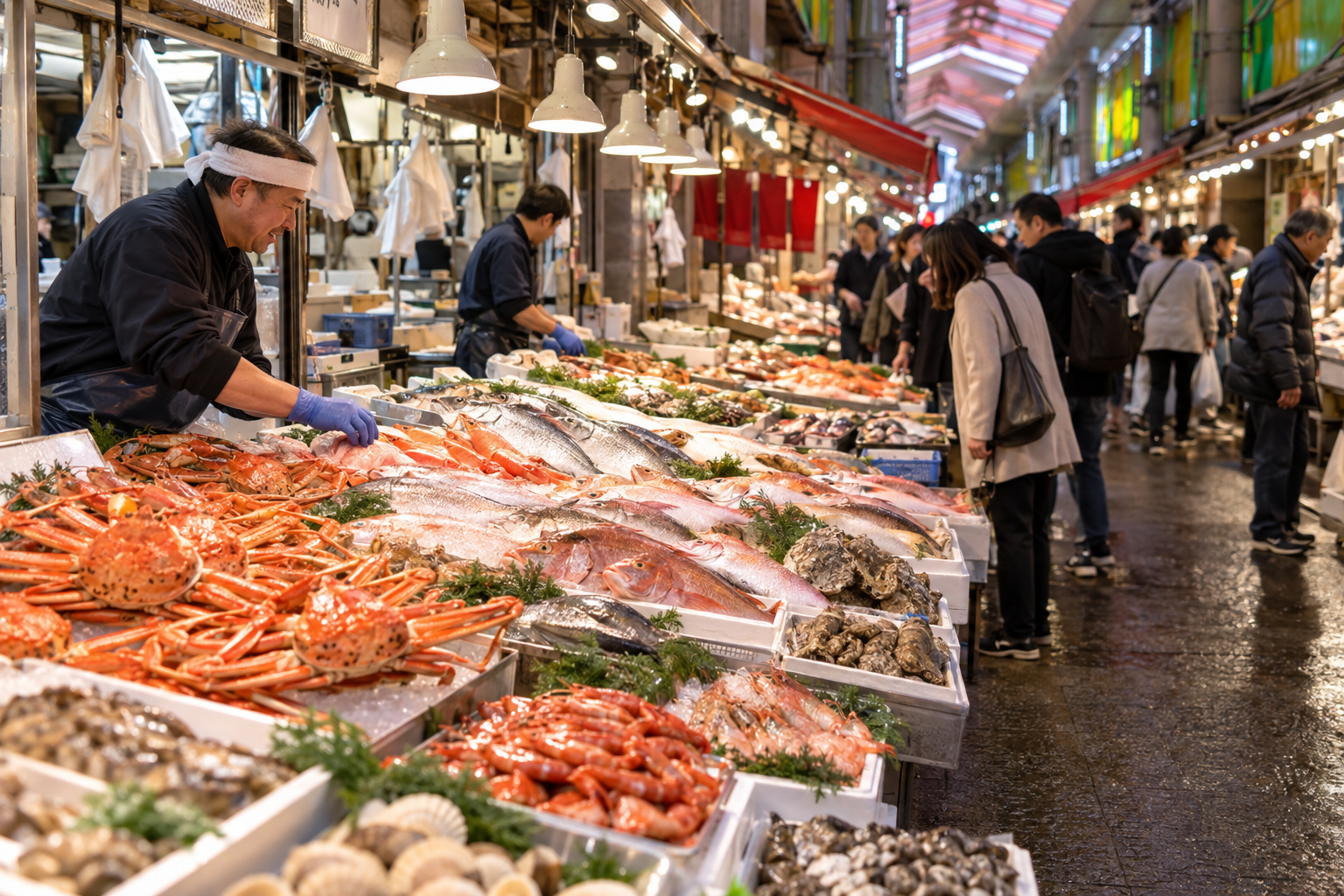
Furthermore, because it faces the Sea of Japan, fresh seafood is a major attraction. At Omi-cho Market, you can enjoy the unique culinary culture of the Hokuriku region, including sushi, seafood rice bowls, crab, sweet shrimp, and nodoguro (blackthroat seaperch).
Unlike major cities such as Tokyo and Osaka, Ishikawa Prefecture is characterized by its ability to let visitors experience Japanese history, traditional crafts, gardens, and fine cuisine in a relaxed atmosphere. The main tourist attractions are concentrated in central Kanazawa City, allowing visitors to efficiently explore them by bus or on foot.
Historical Background
Kanazawa developed as a castle town ruled by the Maeda clan of the Kaga Domain during the Edo period. At that time, the Kaga Domain was one of the wealthiest domains in Japan. As a result, samurai culture, the tea ceremony, crafts, and garden culture flourished there.
Furthermore, Kanazawa was a city that suffered relatively little damage from air raids during World War II. Even today, the atmosphere of the streetscapes and architecture dating back to the Edo period remains intact in areas such as the Higashi Chaya District and the Nagamachi Samurai Residences.
Culture and Traditions
Ishikawa Prefecture is a region renowned for its traditional crafts. Kanazawa City, in particular, is known as a center for gold leaf production. Gold leaf is a craft material made by stretching gold into an extremely thin sheet. Gold leaf produced in Kanazawa accounts for the majority of Japan’s total production.
In addition, Kaga Yuzen and Kutani ware are also traditional crafts that represent Ishikawa Prefecture.
Kaga Yuzen:A traditional dyeing technique of Ishikawa Prefecture featuring delicate depictions of natural flowers, plants, and landscapes
Kutani-yaki:Traditional ceramics from Ishikawa Prefecture characterized by their vividly colored designs
Wajima-nuri:Durable and beautiful lacquerware produced primarily in Wajima City
Local Specialties and Food Culture
Because Ishikawa Prefecture faces the Sea of Japan, it offers an abundance of seafood dishes. The types of seafood available vary by season, and many travelers visit specifically in winter to enjoy crab dishes.
In Kanazawa City, you can enjoy local specialties such as seafood rice bowls, sushi, nodoguro (blackthroat seaperch), sweet shrimp, and jibuni (a simmered dish). Japanese sweets and sake are also representative of Ishikawa Prefecture’s food culture.
For travelers who want to explore a relatively compact area while enjoying historic scenery similar to that of Kyoto, Ishikawa Prefecture is an easily accessible destination.
Reasons for the Increase in Foreign Tourists Visiting Ishikawa Prefecture
The number of foreign tourists staying overnight in Ishikawa Prefecture has been increasing in recent years. Although there was a significant decline from 2020 to 2022 due to the impact of the COVID-19 pandemic, an upward trend has been observed since then, in line with the recovery of inbound tourism to Japan.
Trends in the Number of Guests by Foreign Tourists in Ishikawa Prefecture
In 2024, the number of foreign visitors increased significantly, and Ishikawa Prefecture became one of the regions attracting the most attention from travelers visiting Japan.
Ishikawa Prefecture is chosen by international travelers for the following reasons:
Easy access from Tokyo to Kanazawa Station via the Hokuriku Shinkansen
Major tourist attractions are concentrated in central Kanazawa, making it easy to sightsee even on a short trip
Visitors can enjoy traditional Japanese scenery, such as Kenroku-en Garden, Kanazawa Castle, and the Chaya District
The region boasts a unique culinary culture featuring seafood, Japanese sweets, and sake
Visitors can experience traditional crafts such as gold leaf, Kaga Yuzen, and Kutani ware
Trips to hot spring resorts such as Kaga Onsenkyo, Yamanaka Onsen, and Yamashiro Onsen are also possible
Around these hot spring resorts, visitors can enjoy natural landscapes characteristic of the Hokuriku region, such as mountains and rivers
Kanazawa, in particular, is appealing because it allows visitors to experience historic streetscapes, contemporary art, gourmet cuisine, and traditional crafts all at once. It is ideal for those seeking a travel experience in Japan that differs from that of major cities.
Must-See Tourist Attractions in Ishikawa Prefecture
Kenrokuen Garden
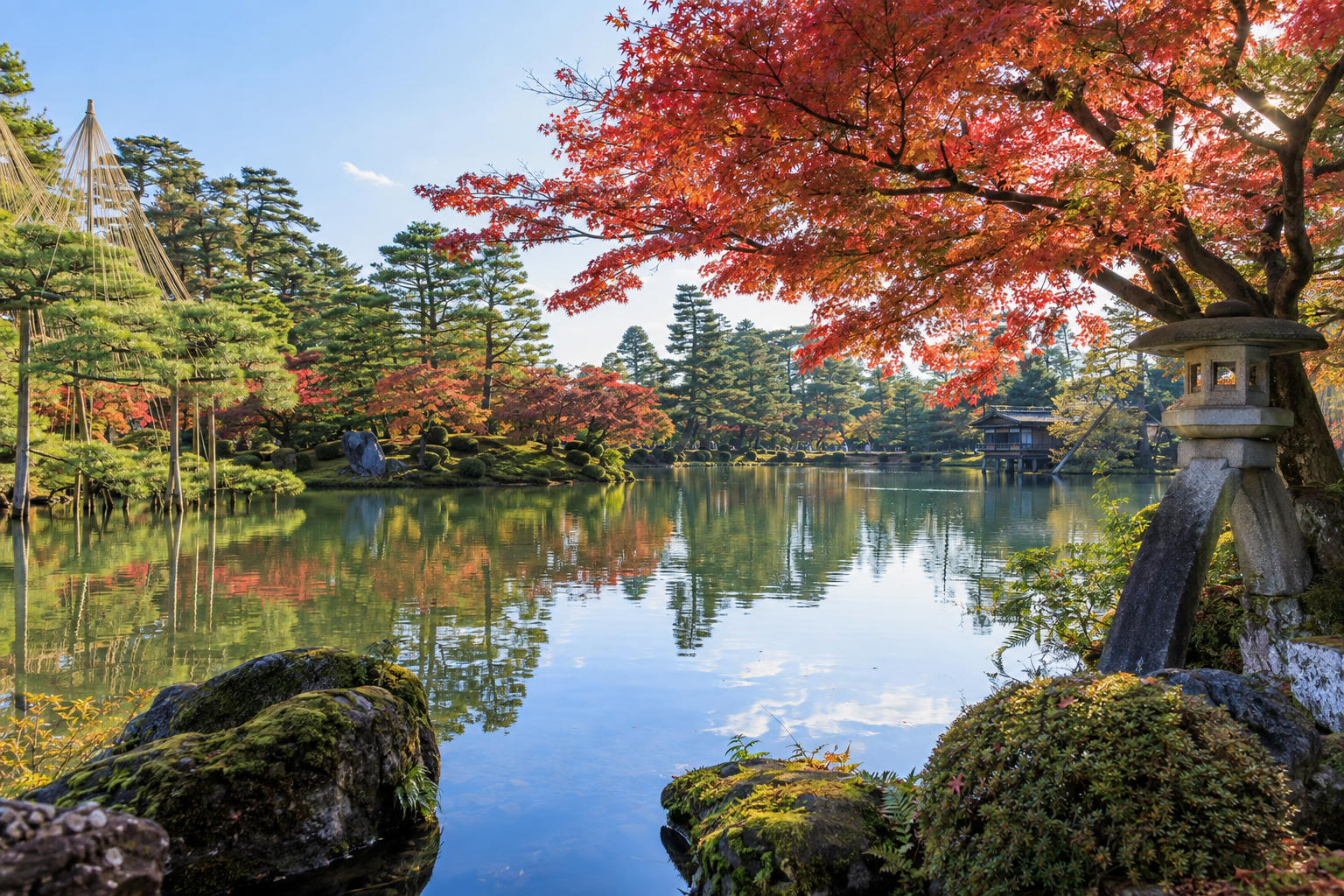
Kenroku-en is a daimyo garden considered one of Japan’s Three Great Gardens. A daimyo garden refers to a large-scale Japanese garden constructed by a daimyo during the Edo period. Kenroku-en was developed over a long period of time by the Maeda family of the Kaga Domain.
The garden features a pond, bridges, a tea house, stone lanterns, and pine trees, allowing visitors to enjoy a landscape characteristic of Japanese gardens. One of the garden’s most iconic features is the Kotogi Lantern, located near the pond.
In winter, “yukitsuri” (snow supports) are installed to protect the pine branches from the weight of the snow. Yukitsuri—a winter tradition in Kanazawa—involves stretching ropes from the tops of the trees to support the branches.
Highlights
The Kotōji Lantern and Kasumiga Pond
The Garden’s Scenery Changes with the Seasons
Cherry Blossoms in Spring
Fresh Greenery in Early Summer
Autumn Foliage
Winter Snow-Support Ropes and Snowy Scenery
Why It’s Recommended for International Travelers
At Kenroku-en, you can appreciate the design of Japanese gardens and the beauty of the four seasons. It’s easy to take photos while strolling through the garden, making it a great choice even for travelers visiting a Japanese garden for the first time.
Directions
Take a local bus or sightseeing loop bus from Kanazawa Station and get off at the “Kenroku-en Shita/Kanazawa Castle” bus stop. It’s a few minutes’ walk from the bus stop to Kenroku-en. Travel time varies depending on traffic conditions, but it generally takes about 15 to 20 minutes from Kanazawa Station.
Travel Tips
The park can get crowded on weekends in spring and fall, as well as during the winter when the snowy scenery is at its best.
On rainy or snowy days, the cobblestone paths and garden walkways can be slippery, so we recommend wearing comfortable walking shoes.
Opening hours and admission fees are subject to change. Please check the official website before your visit.
Kanazawa Castle Park
Kanazawa Castle Park is a park developed on the site of Kanazawa Castle, which served as the residence of the Maeda family, lords of the Kaga Domain. Since it is adjacent to Kenroku-en Garden, visitors can explore both attractions in succession.
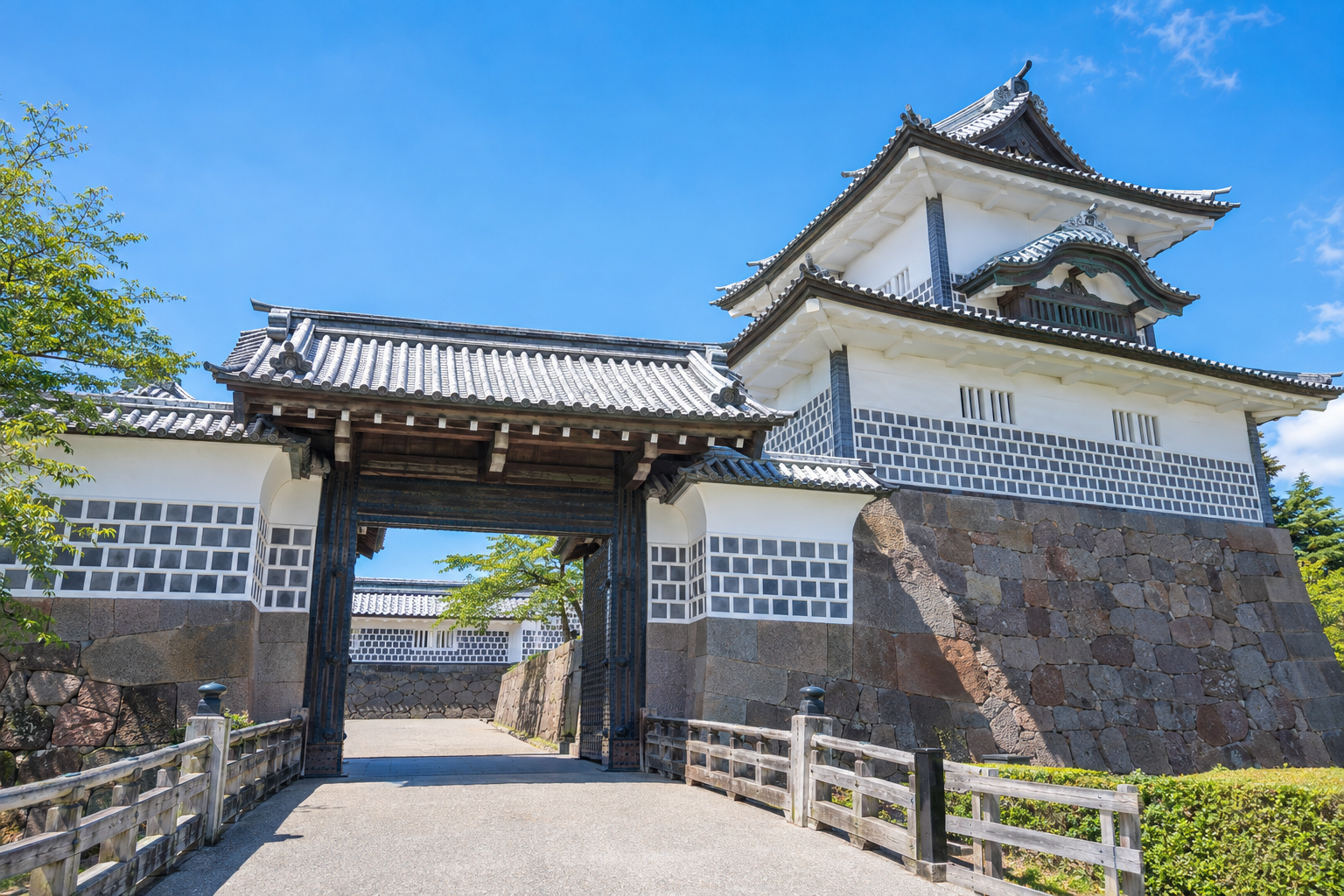
Kanazawa Castle served as the political and cultural center of the Kaga Domain during the Edo period. Within the current park, you’ll find restored watchtowers, gates, stone walls, and open plazas.
Highlights
Hishi-yagura (Diamond-shaped Watchtower)
Gojikken Nagaya (50-ken-long Row House)
Hashizume Gate
Kahoku Gate
Ishikawa Gate
Viewing the Stone Walls
View of Kenroku-en Garden
The architectural complex, characterized by the contrast between white walls and black roof tiles, is also a highlight. There are also spots where you can see walls featuring distinctive black-and-white patterns known as “namako-kabe” (sea cucumber walls).
Why It’s Recommended for International Travelers
Although this is the site of a Japanese castle, it’s not just a tourist spot where you come to see the castle keep. Through its stone walls, gates, watchtowers, and row houses, you can learn about Japanese castle architecture and the history of castle towns.
Since it’s within walking distance of Kenroku-en Garden, it’s convenient for travelers who want to sightsee on a tight schedule.
Directions
It takes about 15 to 20 minutes by bus from Kanazawa Station to the “Kenroku-en Shita/Kanazawa Castle” bus stop. Since it’s located in the same area as Kenroku-en Garden, we recommend visiting it before or after touring the garden.
Higashi Chaya District
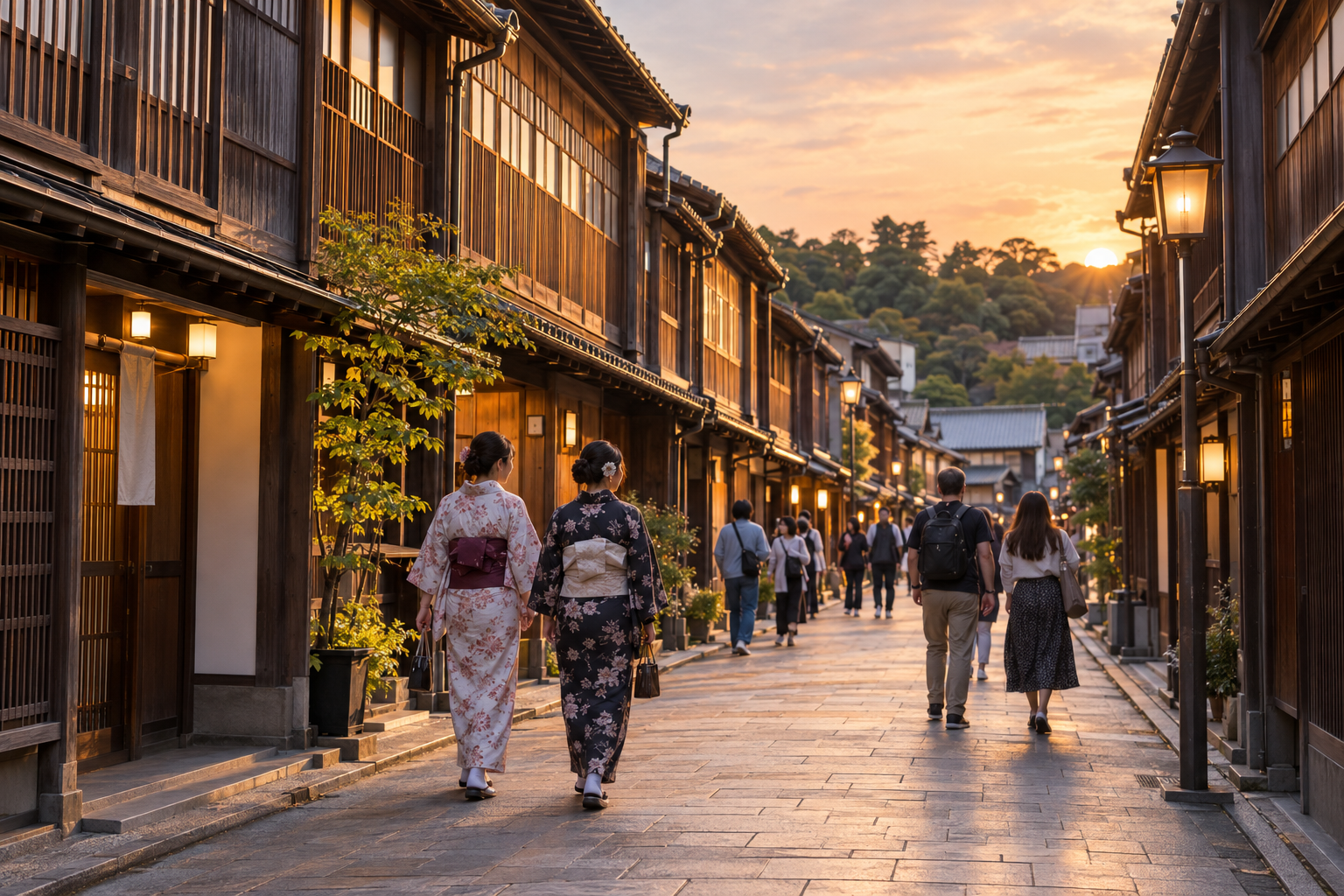
Higashi Chaya-gai is one of Kanazawa’s most iconic historic districts. A “chaya” was a venue during the Edo period where geisha performed songs and dances. Today, it is known as a tourist area lined with traditional wooden buildings. Along the cobblestone streets, you’ll find gold leaf shops, Japanese confectionery stores, cafes, craft shops, and galleries. It’s highly recommended for anyone who wants to stroll through a neighborhood that embodies the essence of Kanazawa.
Highlights
Traditional wooden buildings lined with lattice doors
Sweets made with gold leaf
Japanese confectionery shops and cafes
Traditional craft shops
Facilities where you can tour chaya architecture
The tranquil atmosphere of the streets in the early morning or evening
Why It’s Recommended for International Travelers
Higashi Chaya-gai is a popular spot for capturing photos of Kanazawa’s distinctive historical scenery. Many travelers enjoy strolling through the area while wearing rented kimonos.
However, please note that this is a residential area where people still live.
Directions
Take a bus from Kanazawa Station to a bus stop near “Hashiba-cho” or “Higashiyama,” and then walk from there. Bus routes and travel times vary depending on the specific bus you take, so please check in advance.
Nomura Samurai Residence
The Nomura Family Samurai Residence Site is a historic residence located in the Nagamachi Samurai Residences area. A samurai residence refers to the homes where samurai lived during the Edo period. At the Nomura Family Residence, visitors can tour the buildings—which offer a glimpse into the daily lives and architectural styles of the samurai—as well as the Japanese garden.
Highlights
Architecture reminiscent of an Edo-period samurai residence
Views of the Japanese garden from inside the house
Exhibits of samurai armor and art objects
The tranquil atmosphere of a castle town
Why It’s Recommended for International Travelers
Here, you can learn about Edo-period samurai culture from a perspective different from that offered by Kanazawa Castle or Kenroku-en Garden. Another attraction is the opportunity to step inside the building and observe the construction of a traditional Japanese house and the garden up close.
Directions
You can travel from Kanazawa Station to the Nagamachi Samurai Residences area by bus or taxi. It is also possible to walk from the city center, though the travel time varies depending on your starting point.
Travel Tips
You may be required to remove your shoes when touring the facility. We recommend wearing clothing that makes it easy to take your shoes on and off. Opening hours and closed days are subject to change, so please check the official information.
Myoryuji Temple / Ninja Temple
Myōritsu-ji is a Nichiren Shū temple located in Kanazawa City. Although it is commonly known as the “Ninja Temple,” it was not actually a temple where ninjas lived.
Inside the building, there are hidden staircases, trap-like mechanisms, and intricate passageways, creating a structure that is unimaginable from its exterior. It is believed to have been built with defense in mind during the Kaga Domain era.
Highlights
Complex interior structure
Hidden staircases
Rooms with hidden mechanisms
Temple architecture and defensive features
Guided tours of the temple
Why it’s recommended for international travelers
Its appeal lies in offering an experience distinct from typical temple sightseeing. It is recommended for travelers interested in history, architecture, and puzzle-solving elements.
Directions
Myōritsu-ji is located in the Teramachi Temple District of Kanazawa City. From Kanazawa Station, take a local bus
Travel Tips
Visits to Myōritsu-ji Temple generally require a reservation. Since you may not be able to visit on your preferred date and time, we recommend checking the official information well in advance and making a reservation.
Please note that photography may be restricted inside the temple grounds. Please follow the instructions of the staff.
21st Century Museum of Contemporary Art, Kanazawa
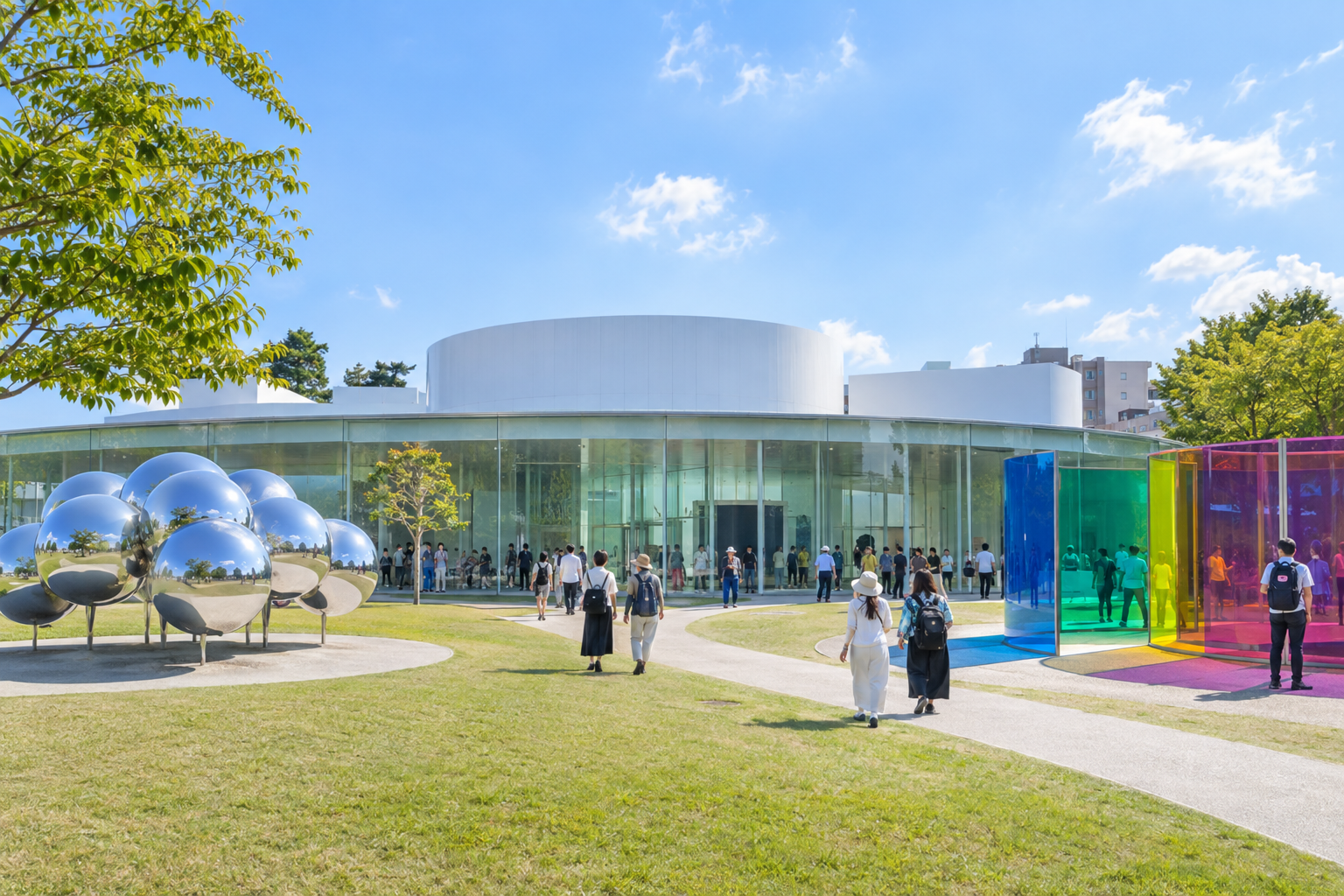
The 21st Century Museum of Contemporary Art, Kanazawa is an art museum dedicated to exhibiting contemporary art. It is characterized by its circular building and open, airy design that makes extensive use of glass.
In Kanazawa, a city rich in historic gardens and castle ruins, the museum is a popular destination for experiencing contemporary culture.
Highlights
“Swimming Pool” by Leandro Erlich
Architectural design that allows visitors to appreciate the building itself
Contemporary artworks from Japan and abroad
Special exhibitions
Outdoor exhibits and areas open to the public free of charge
Why It’s Recommended for International Travelers
The 21st Century Museum of Contemporary Art, Kanazawa is recommended for travelers who want to experience not only traditional Japanese culture but also contemporary Japanese culture. It is located near Kenroku-en Garden and Kanazawa Castle Park, making it easy to incorporate into your sightseeing itinerary.
Directions
Take a bus from Kanazawa Station to the “Hirosaka/21st Century Museum of Contemporary Art” area. You can also walk from Kenroku-en Garden, Kanazawa Castle Park, and the Nagamachi Samurai Residences.
Travel Tips
Popular exhibitions may be crowded. For some exhibits, such as “Swimming Pool,” the museum may implement a numbered ticket system, require reservations, or adjust viewing procedures. Please check the official website before your visit.
Omicho Market
Omi-cho Market is a historic market located in the heart of Kanazawa City. Often referred to as “Kanazawa’s Kitchen,” it is home to a wide variety of fresh seafood, vegetables, fruits, prepared foods, and restaurants.
Inside the market, you can enjoy sushi, seafood rice bowls, grilled fish, crab, sweet shrimp, nodoguro (blackthroat seaperch), and more.
Highlights
Seafood Rice Bowls
Sushi
Fresh Seafood
Seasonal Crab
Local Vegetables and Fruit
Stalls Where You Can Eat on the Go
The Vibrant Atmosphere of a Typical Kanazawa Market
Why It’s Recommended for International Travelers
This is a place where you can experience Ishikawa Prefecture’s food culture in a short amount of time. It’s relatively close to Kanazawa Station, making it a convenient stop for a meal on your first day of sightseeing or before heading home.
Directions
Omi-cho Market is accessible by bus from Kanazawa Station. While you can walk there, taking a bus or taxi is more convenient if you’re carrying luggage or if it’s raining or snowing.
Travel Tips
Popular restaurants may have lines during lunchtime. If you visit early, you may find it easier to get a seat. The market is not only a tourist destination but also a place frequented by locals. Please be careful not to block the aisles.
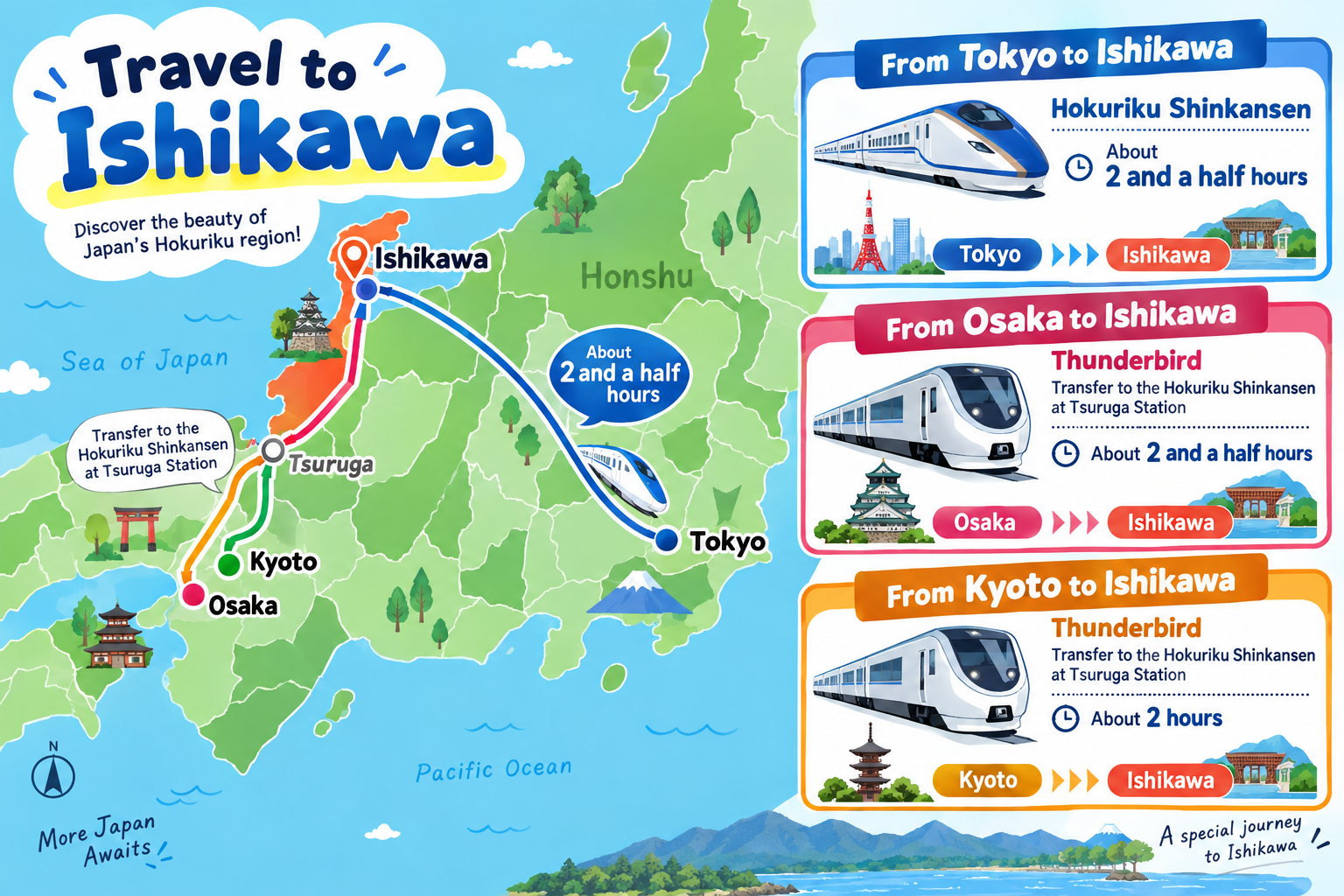
Access to Ishikawa Prefecture from major cities such as Tokyo, Osaka, and Kyoto
Getting from Tokyo to Kanazawa
The most common way to travel from Tokyo to Kanazawa is by the Hokuriku Shinkansen.
Take the Hokuriku Shinkansen “Kagayaki” or “Hakutaka” from Tokyo Station to Kanazawa Station. The number of stops and travel time vary depending on the train.
Departure Stations: Tokyo Station, Ueno Station, Omiya Station, etc.
Arrival Station: Kanazawa Station
Estimated Travel Time: About 2.5 hours
Transfers: Generally none
The “Kagayaki” makes fewer stops. The “Hakutaka” stops at stations along the way, so the travel time may be longer.
Access to Kanazawa from Osaka
When traveling to Kanazawa from the Osaka area, the most common route is to take the “Thunderbird” limited express and the Hokuriku Shinkansen.
Following the extension of the Hokuriku Shinkansen to Tsuruga, take the “Thunderbird” limited express from Osaka Station to Tsuruga Station, then transfer to the Hokuriku Shinkansen at Tsuruga Station to continue on to Kanazawa Station.
Departure Stations: Osaka Station, Shin-Osaka Station, etc.
Transfer Station: Tsuruga Station
Arrival Station: Kanazawa Station
Estimated Travel Time: Approximately 2 hours and 30 minutes
Transfers: 1
Transfer times and train connections vary depending on the schedule. If you have large luggage, be sure to allow plenty of time for your trip.
Getting from Kyoto to Kanazawa
To travel from Kyoto Station to Kanazawa Station, you’ll also take the “Thunderbird” limited express and the Hokuriku Shinkansen.
Departure Station: Kyoto Station
Transfer Station: Tsuruga Station
Arrival Station: Kanazawa Station
Estimated Travel Time: About 2 hours
Transfers: 1
The route from Kyoto to Kanazawa is recommended for travelers who want to combine visits to Japan’s historic cities.
Getting to Kanazawa from Nagoya
To travel from Nagoya to Kanazawa, you can take a train route that includes transfers at stations such as Maibara Station or Tsuruga Station. Since the route varies depending on the train you take and the time of day, please check the transfer guide or the official JR website in advance.
While express buses are sometimes available, the travel time can be longer. If time is a priority, taking the train is more convenient.
Access via the Airport
Komatsu Airport is the main airport in Ishikawa Prefecture. Located southwest of Kanazawa City, it primarily handles domestic flights. You can travel from Komatsu Airport to downtown Kanazawa by airport limousine bus, taxi, or rental car.
Airport Limousine Bus
The airport limousine bus is a convenient way to travel from Komatsu Airport to Kanazawa Station.
Destination: Kanazawa Station
Estimated travel time: About 40 minutes
Features: Easy to use even for travelers with large luggage
The number of departures, boarding locations, fares, and reservation requirements are subject to change. Please check the official website of the airport or the bus company before using this service.
Taxi
Taxis are convenient if you want to travel directly to your hotel or destination. However, fares are higher than those for the bus. Travel time varies depending on traffic conditions.
Rental Car
A rental car is convenient if you plan to explore areas outside Kanazawa City, such as the Kaga Hot Springs Region, the Noto Peninsula, and the Hakusan area. On the other hand, if you are only sightseeing in central Kanazawa City,
About International Flights
International flight schedules at Komatsu Airport are subject to change depending on the season and airline operations. Please check the official Komatsu Airport website for the latest information on international flights.
If there are few international flight options available, travelers often fly into Haneda or Narita Airports in Tokyo, or Kansai International Airport in Osaka, and then take a domestic flight or train to Kanazawa.
Travelers often take a domestic flight or train to Kanazawa.
Getting Around Ishikawa Prefecture
Areas Easy to Explore on Foot
The central area of Kanazawa City features sightseeing spots that are easy to reach on foot.
In particular, the following spots are easy to visit by combining bus and walking.
Kenroku-en Garden
Kanazawa Castle Park
21st Century Museum of Contemporary Art, Kanazawa
Nagamachi Samurai Residences
Omi-cho Market
Higashi Chaya District
However, some sections—such as the route from Kenroku-en to the Higashi Chaya District—take about 20 to 30 minutes on foot. On rainy days, hot summer days, snowy days, or when carrying large luggage, it is more convenient to take a bus or taxi.
Buses
Within Kanazawa City, regular route buses and sightseeing loop buses are convenient. The “Kanazawa Castle Town Sightseeing Bus,” which circles major tourist attractions, is an easy option for first-time visitors to Kanazawa.
Routes, operating hours, stops, and fares are subject to change. Please check the official website or a tourist information center before boarding.
One-Day Pass
In Kanazawa City, there may be bus passes available that allow you to ride buses on specific routes a set number of times or for an entire day. If you plan to visit multiple tourist spots by bus, these passes may offer good value.
Please check the sales locations, eligible routes, and terms of use before purchasing, as they are subject to change.
Trains
Within Ishikawa Prefecture, local railways such as the Hokuriku Railway are available in some areas. When visiting major tourist spots in central Kanazawa, buses or walking are often more convenient than trains.
Taxis
Taxis are convenient if you want to save time, on rainy or snowy days, for family trips, or when traveling with large luggage. If you want to visit multiple tourist spots in a short amount of time, you might also consider a sightseeing taxi.
Culinary and Cultural Experiences to Enjoy in Ishikawa Prefecture
Seafood Cuisine
In Ishikawa Prefecture, you can enjoy fresh seafood caught in the Sea of Japan. At Omicho Market and at sushi restaurants, izakayas, and seafood restaurants throughout Kanazawa, you can savor seafood bowls, sushi, grilled fish, and more.
Crab dishes are popular in winter. However, the fishing season and availability vary depending on the species. If you’re looking for a specific dish, be sure to check the best time to visit and the restaurant’s availability in advance.
Gold Leaf Delicacies
In the area around Higashi Chaya-gai, you can enjoy soft-serve ice cream, traditional Japanese sweets, and other treats topped with gold leaf. While gold leaf doesn’t add any flavor to the food itself, it gives the dishes a gorgeous, elegant look that’s characteristic of Kanazawa.
These treats are popular photo subjects, but please be mindful not to disturb other tourists or local residents while taking pictures inside the shops or in the surrounding area.
Local Sake
Ishikawa Prefecture is also known as a region famous for sake production. In Kanazawa City and the Kaga area, you’ll find restaurants and sake breweries where you can enjoy sake.
If you plan to sample sake, please be mindful of age verification requirements and whether you’ll be driving. In Japan, drinking alcohol is prohibited for those under 20 years of age. Additionally, driving under the influence is strictly prohibited.
Traditional Craft Experiences
In Kanazawa, there are facilities where you can experience the region’s traditional crafts.
Gold Leaf Application Workshop
Kaga Yuzen Dyeing Workshop
Kutani Ware Painting Workshop
Wagashi (Japanese Sweets) Making Workshop
Tea Ceremony Workshop
Depending on the activity, advance reservations may be required. English-language support, duration, fees, and cancellation policies vary by facility, so please check the official website for details.
Kimono Experiences
There are shops around the Higashi Chaya District where you can rent kimonos and yukatas. This is popular among travelers who want to stroll through the traditional streets in a kimono.
Since kimonos can be difficult to walk in, we recommend keeping your route short if you plan to walk long distances. On rainy or snowy days, please check with the rental shop regarding their policies and return procedures.
Recommended Itinerary for First-Time Visitors to Ishikawa Prefecture
1-Day Sample Itinerary
Morning: Kenroku-en Garden and Kanazawa Castle Park
After arriving at Kanazawa Station, take a bus to Kenroku-en Garden. Stroll through Kenroku-en Garden, then visit the adjacent Kanazawa Castle Park. The estimated time for both Kenroku-en Garden and Kanazawa Castle Park combined is about 2.5 to 3 hours.
Lunch: Lunch at Omi-cho Market
Head to Omi-cho Market to enjoy seafood rice bowls, sushi, set meals, and more. Popular restaurants tend to get crowded, so arriving before the lunch rush may make it easier to get a seat.
Afternoon: 21st Century Museum of Contemporary Art, Kanazawa and Higashi Chaya District
In the afternoon, admire contemporary art at the 21st Century Museum of Contemporary Art, Kanazawa. Afterward, take a bus or taxi to the Higashi Chaya District and stroll through the streets that embody the unique charm of Kanazawa. In the Higashi Chaya District, you can enjoy gold-leaf sweets, traditional Japanese confections, cafes, and craft shops.
Evening: Dinner Around Kanazawa Station
If you have time to spare, enjoy sushi, local cuisine, and sake around Kanazawa Station. If you’re on a day trip, be sure to return to the station well in advance of your Shinkansen or local train departure time.
Sample 2-Day, 1-Night Itinerary
Day 1: Enjoying Historic Kanazawa
Morning: Visit Kenroku-en Garden and Kanazawa Castle Park.
Lunch: Enjoy seafood dishes at Omi-cho Market.
Afternoon: Head to the Nagamachi Samurai Residences and tour the Nomura Family Residence. Afterward, if a reservation is available, visit Myoryuji Temple.
Evening: Stay at a hotel or ryokan in Kanazawa. You can enjoy dinner in areas such as around Kanazawa Station, Korinbo, and Katamachi.
Higashi Chaya-gai is an area with many residential homes and shops. The number of shops open at night and facilities open to visitors may be limited. If you plan to take an evening stroll, please check business hours and safety precautions.
Day 2: Enjoying Contemporary Art and Traditional Culture
Morning: Visit the 21st Century Museum of Contemporary Art, Kanazawa. For exhibitions expected to be crowded, it’s best to visit early in the day.
Lunch: Enjoy gold-leaf sweets, traditional Japanese confections, or a café lunch in the area around Higashi Chaya District.
Afternoon: We will participate in traditional craft workshops, such as gold leaf application, Kutani ware painting, and Japanese confectionery making. After the workshops, we will return to Kanazawa Station and head home.
Summary
Ishikawa Prefecture is a travel destination where you can enjoy the scenery of castle towns dating back to the Edo period, beautiful Japanese gardens like Kenroku-en, contemporary art at the 21st Century Museum of Contemporary Art, Kanazawa, and fresh seafood cuisine.
Since Kanazawa’s main tourist attractions are concentrated within the city, you can visit many of them even in just one day. If you stay overnight, it’s easy to add traditional craft workshops, local cuisine, and short trips to hot spring resorts to your itinerary.
If you want to enjoy history, culture, gardens, art, and gourmet cuisine all at once, consider adding Ishikawa Prefecture to your itinerary for your next trip to Japan.



-4.png)
.png)
.png)